Esports Betting vs. Online Casino Gaming: A Clear Comparison


The modern online gambling industry has transformed into a powerhouse of entertainment and opportunity. From online casino games to eSports betting, punters in Zambia today enjoy more options than ever before. But how do these two betting formats compare — and what does the future hold for both?
This guide breaks down the evolution, numbers, and future of eSports betting while contrasting it with the long-standing dominance of online casinos in the digital gambling space for Zambian players.
Online Casino Games: The Heart of Internet Gambling for Zambians
What Defines Online Casino Games?
Online casinos bring traditional gaming experiences like slots, roulette, blackjack, and poker to the web. Accessible via computers and smartphones, they allow players to wager real money in real time. Unlike physical venues, online casinos operate 24/7 — unrestricted by geography or schedules. This convenience is a major draw for Zambian players.
Why Players in Zambia Choose Online Casinos
Players are drawn to the autonomy of online casino gambling. They select their preferred games, determine bet sizes, and navigate strategies at their own pace. Moreover, the market’s diversity is unmatched; with thousands of platforms available, users can experiment with different casinos or titles easily.
Online Casino Market and Growth Statistics
The global online casino market continues to show strong expansion:
- USD 19.11 billion (2024) projected to reach USD 38 billion (2030) at a Compound Annual Growth Rate (CAGR) of 12.2%.
- Broader valuations estimate USD 32.88 billion (2024) growing to USD 113.05 billion (2033) — a CAGR of 14.7%.
- In the U.S., the segment was worth USD 6.78 billion in 2024, projected to hit USD 13.07 billion by 2030.
- Globally, the overall online gambling market (including casinos, sports, and eSports) will reach USD 153.6 billion by 2030, doubling from 2024 levels.
These figures underscore that online casinos remain the backbone of digital betting — mature, resilient, and consistently profitable for many Zambian operators and players.
eSports and eSports Betting: The New Frontier in Competitive Wagering
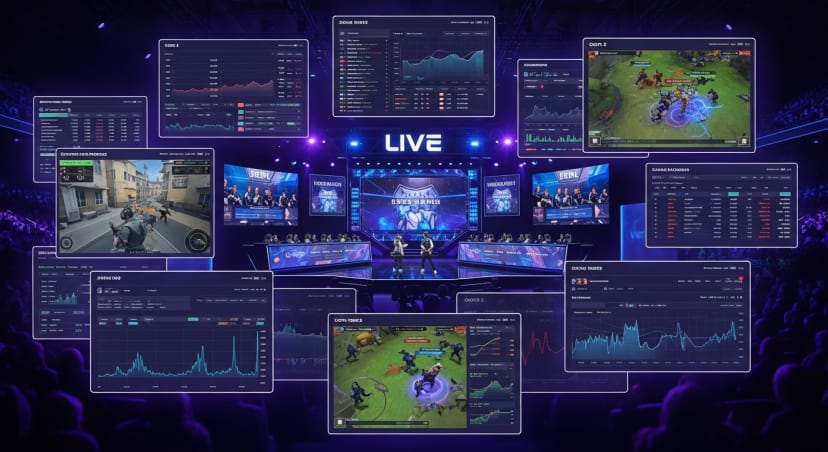
Most popular esports games are organized, competitive video gaming tournaments where professional players and teams compete for recognition and prize money. Popular categories include MOBA games (League of Legends, Dota 2), first-person shooters (CS:GO, Valorant), and sports simulations (FIFA, NBA 2K).
Betting on eSports involves wagering on match outcomes, player performances, or tournament winners. It combines the thrill of gaming with strategic decision-making — appealing to younger, data-driven bettors who grew up watching Twitch and YouTube streams.
Benefits of eSports Betting
- Data-Driven Decisions: Bettors analyze player stats, past performance, and team history to make informed wagers.
- Entertainment Value: Watching live matches while betting enhances engagement, offering an interactive experience beyond traditional gambling.
- Flexible Betting Options: With numerous esports tournaments year-round and no seasonal limitations, eSports betting ensures consistent opportunities to place bets.
Comparing eSports Betting and Online Casino Gaming
| Aspect | e Sports Betting | Online Casino Games |
|---|---|---|
| Core Mechanism | Skill and analysis-based; players study statistics and team performance | Chance-driven; outcomes determined by RNG or house edge |
| Player Role | Spectator-analyst — bettors follow live matches and make data-informed decisions | Participant-player — users actively play games against house or others |
| Entertainment Value | Highly interactive, social, and community-based | Individually immersive; focuses on personal gameplay experience |
| Audience Demographics | Younger, tech-savvy, predominantly Gen Z and millennials | Broader demographic; includes older and casual gamblers |
| Market Size (2024) | ~USD 16 billion | ~USD 33 billion |
| Projected Market (2033) | Up to USD 87.9 billion (+17.7% CAGR) | Up to USD 113 billion (+14.7% CAGR) |
| Skill Factor | Knowledge of teams and strategy matters | Primarily dependent on luck and probability |
| Technology Dependence | Uses streaming, AI odds, real-time data analytics | Relies on RNG software, live dealers, and blockchain systems |
| Seasonality | Continuous year-round tournaments | 24/7 gameplay but not event-driven |
| Social Impact | Builds fandoms and shared communities | Focused on individual enjoyment and winnings |
This side-by-side comparison reveals a defining difference: eSports betting appeals to prediction and analysis, whereas casino betting thrives on instant gratification. Yet both share dependence on technology and mobile convenience, converging as complementary entertainment options in the wider gambling ecosystem.
4. Market Trends Shaping Both Sectors
Despite their contrasts, both industries are evolving in similar directions — driven by innovation and changing user behavior.
- Mobile dominance: Nearly 60% of all eSports bets and 65% of casino transactions occur via smartphones or tablets.
- AI & personalization: Algorithms now suggest games and wagers based on user history and probability modeling.
- Blockchain adoption: Transparency and fairness are enhanced through decentralized verification systems.
- Cross-industry sponsorships: Betting companies are sponsoring eSports teams, while casinos integrate eSports lounges to attract younger players.
These overlapping dynamics suggest convergence rather than competition. Both sectors are increasingly using the same technologies and engagement models to serve distinct but overlapping audiences.
The Future of eSports Betting and Online Casinos
Innovations and Technological Drivers
Both industries are shaped by ongoing technological disruption. Artificial Intelligence now helps predict outcomes and personalize recommendations. Blockchain ensures transparency in payouts, more payment options for esports, augmented/virtual reality technologies blur the boundary between gaming and real-world interaction.
Additionally, live-dealer streaming in casino games and live-match integration in eSports are merging entertainment with wagering at a faster pace than ever.
The Future of eSports Betting
The eSports betting sector will benefit from stronger institutional partnerships, brand sponsorships, and integrated betting platforms. As more gaming publishers (e.g., Riot, Valve) collaborate with betting operators, regulated frameworks will bring mainstream legitimacy.
The concept of “bet-on-yourself” — allowing casual gamers to wager on their own performance — will further expand participation. As 5G networks improve latency, live-in-play markets will dominate, bringing eSports closer to real-time trading than traditional gambling.
The Future of Online Casino Gaming
Online casinos continue to evolve, targeting the next generation of players with skill-based mechanics and gamified elements similar to eSports. By 2030, more than 60% of global casino traffic is expected to come from mobile devices.
Live-dealer and VR casinos are projected to grow by over 20% annually, giving players a near-physical experience. Meanwhile, blockchain casinos are attracting investors for their transparency and low operational costs.
Industry-Wide Growth Outlook
The global gambling market is entering a phase of parallel expansion:
- eSports Betting – Expected to surpass USD 50 billion by 2034, driven by a younger demographic and real-time engagement.
- Online Casinos – Forecasted to exceed USD 113 billion by 2033, supported by regulation, immersive tech, and global accessibility.
While the casino market holds the financial lead, eSports betting is the cultural engine of change. Each feeds the other — casino operators sponsor eSports teams, and eSports betting attracts gamers to casino platforms.
Final Thoughts: Co-Evolution, Not Competition
The future of online gambling isn’t a battle between eSports betting and online casinos — it’s a convergence. Casinos represent heritage and reliability, while eSports symbolizes innovation and youth engagement.
Together, they create a digital ecosystem that’s data-driven, interactive, and inclusive. With both sectors expected to grow by double digits in the next decade, players and operators alike can expect a future where entertainment, technology, and gambling coexist — shaping a new era of global iGaming.
FAQ
Is eSports betting more profitable than online casinos in Zambia?
Currently, no. Online casinos globally generate higher revenue. While specific Zambian figures are emerging, worldwide online casinos made over USD 32 billion in 2024, compared to roughly USD 15 billion for eSports betting. However, eSports betting's rapid growth suggests it could become very profitable for operators here in Zambia too.
Will eSports betting become bigger than online casinos in the future?
It's unlikely eSports betting will surpass casinos in total revenue soon, but it's attracting younger players. Forecasts show eSports betting reaching USD 87 billion by 2033, while online casinos could grow to USD 113 billion. So, they're more likely to coexist than compete directly.
Which has more growth potential: eSports betting or online casinos?
eSports betting shows greater relative growth potential because it's newer and has a growing global fan base. Online casinos have steadier, more predictable growth, supported by established rules and long-term player trust.
How do new technologies affect eSports betting and casinos?
Both are changing fast because of technology. eSports betting uses AI, live streaming, and real-time data. Online casinos use VR, blockchain payments, and AI to make things better for players.
Is eSports betting legal everywhere, like online casino games?
No, the rules are different in each place. Some countries license both eSports and casino betting, but others limit eSports because it's linked to gaming and younger people. Always check Zambia's gambling laws before you bet.
What's the future of online gambling in Zambia?
The online gambling industry is expected to be worth over USD 150 billion by 2030, driven by mobile gaming, live betting, and blockchain. Both eSports betting and online casinos will likely do well, creating a mix of interactive and skill-based gambling.